Invideo.io vs VidpexAI: Text to Video AI & Free AI Video Generator From Text (2026)
30-Second Snapshot
One-line verdict: Invideo.io wins when your job is script → stock clips → timeline polish for explainers and list videos. VidpexAI wins when your job is ai text to video generator output with custom visuals, image to video ai, and ad variants—not another stock montage that looks like everyone else’s.Key differentiators
- Stock assembly vs. prompt-native generation: Invideo matches scripts to libraries; VidpexAI generates or animates visuals from prompts and stills.
- Editing muscle: Invideo’s timeline is familiar; VidpexAI is lighter on NLE depth, heavier on model + template speed.
- Creative ceiling: VidpexAI leads stylized and multi-model experiments; Invideo leads structured business explainers.
- Credits: Both gate scale; VidpexAI offers plans plus direct credit packs—useful for campaign spikes.
Quick picks
Goal | Pick |
Script → stock explainer / YouTube listicle | Invideo.io |
Performance ads & stylized short-form | VidpexAI |
Timeline control & manual clip swaps | Invideo.io |
Still → motion + avatar in one tab | VidpexAI |
First-day beginner (stock workflow) | Invideo.io |
Heavy creative iteration / many angles | VidpexAI |
Scorecard: Stock Pipeline vs. Prompt Pipeline (2026)
Dimension | Invideo.io | VidpexAI | Leader |
Script-to-first-draft speed (stock) | 9.0 | 7.5 | Invideo |
Timeline / traditional editing | 8.8 | 7.0 | Invideo |
Template library maturity | 9.2 | 8.2 | Invideo |
Prompt-native visual quality (peak) | 7.5 | 8.5 | VidpexAI |
Multi-model / stylized experimentation | 7.0 | 9.0 | VidpexAI |
Image to video ai + still stack | 6.5 | 8.8 | VidpexAI |
Avatar / face workflows | 7.0 | 8.5 | VidpexAI |
First-pass ad usability (our test) | 7.4 | 8.2 | VidpexAI |
“Looks unique” / avoids stock sameness | 6.8 | 8.3 | VidpexAI |
Day-one ease (non-editors, stock path) | 9.0 | 8.3 | Invideo |
Cost predictability (heavy rerolls) | 7.2 | 7.6 | VidpexAI (slight) |
Long-form coherence (8+ min) | 7.0 | 6.8 | Tie (both need human edit) |
Overall | 8.0 / 10 | 8.2 / 10 | Narrow edge to VidpexAI |
Stock-First vs. Prompt-First: Why the Category Split Matters
Most text to video ai searches hide a workflow question:
- Do you already have a script and just need something on screen fast? → stock-first.
- Do you need the visual to match a specific product, face, or style? → prompt-first.
Invideo.io optimizes the first. VidpexAI optimizes the second. Comparing them only on “which generates video from text” misses why teams churn—stock mismatch, manual clip swaps, watermark rules, and credit burn on revisions.A serious text to video ai free trial should log:
- Minutes from paste script → export you’d actually post
- How many stock swaps or regenerations you needed
- Whether a teammate can repeat the process Tuesday
Invideo.io for Script-to-Stock Velocity
Tuesday, 10 a.m. Content ops pastes a 90-second explainer script. Invideo drafts scenes from stock, drops them on a timeline, and you’re swapping two mismatched clips before lunch. That’s the product working as designed.
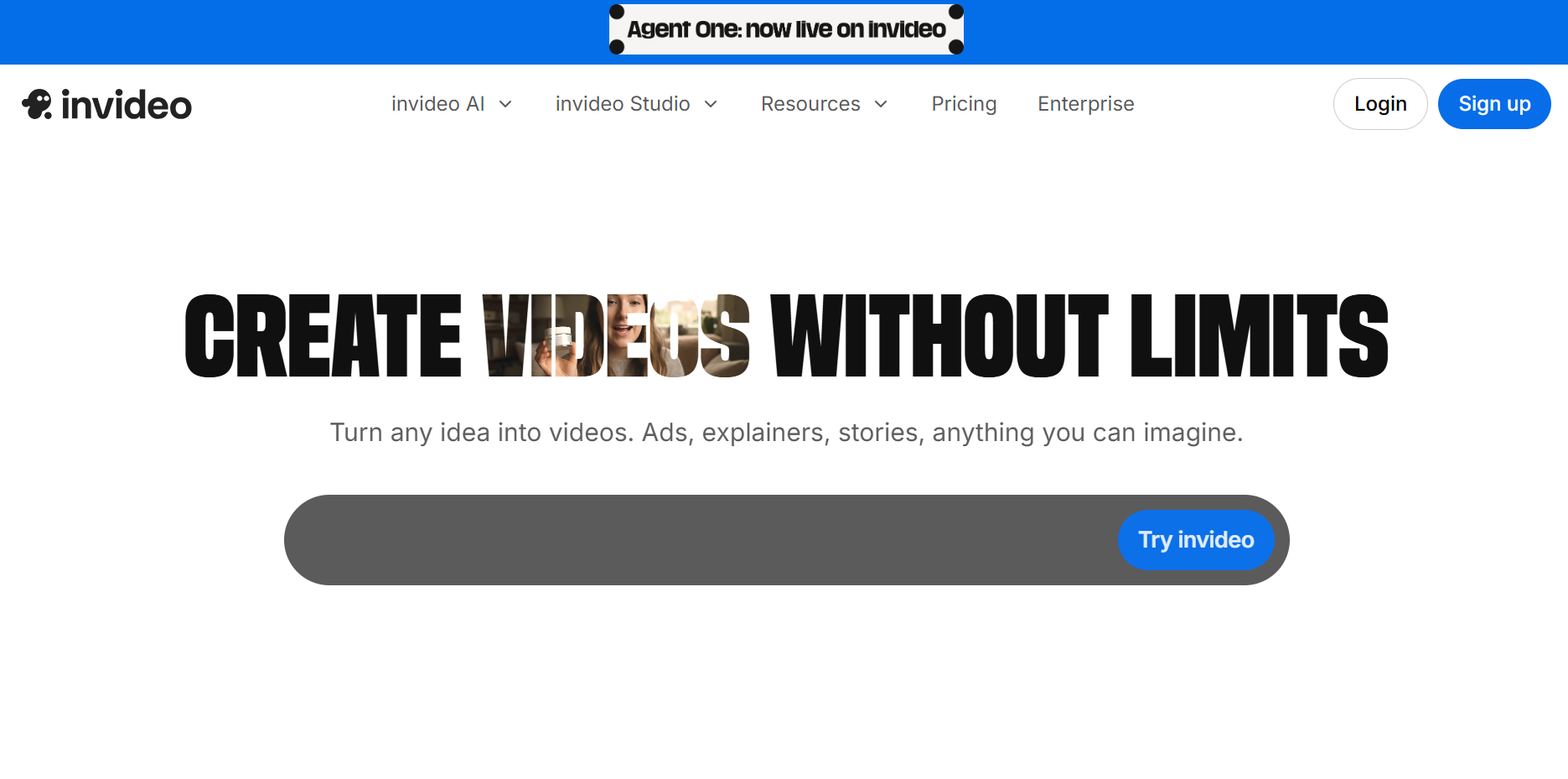
Invideo is strong when structure beats originality: list videos, onboarding walkthroughs, webinar recaps, internal training. The ai video generator from text path is really ai video generator text → stock match → edit. For teams with editors who like timelines, that’s comfort—not limitation.
Where Invideo earns its score
- Fast first drafts from script outlines
- Large template + stock ecosystem
- Predictable “business video” shape
- Manual fix path when auto-match is wrong
Where Invideo fights you
- Stock sameness — viewers recognize library footage
- Mismatch tax — wrong clip → manual search → timeline drag
- Free tier friction — ai video generator free online tests often mean watermarks and export caps
- Less custom hero product shots — hard to match a specific SKU angle without bespoke footage
Invideo.io | /10 |
Script → stock speed | 9.0 |
Timeline editing | 8.8 |
Template ecosystem | 9.2 |
Visual uniqueness | 6.8 |
Prompt-native ads | 7.4 |
Overall | 8.0 |
VidpexAI for Prompt-Native Campaigns (Not a Stock Editor)
Thursday, same team needs six ad hooks from two product stills and a spokesperson frame. Invideo can do it with stock B-roll—but the product isn’t in the library. VidpexAI’s path is generate/refine still → image to video ai → avatar if needed, often in one session.
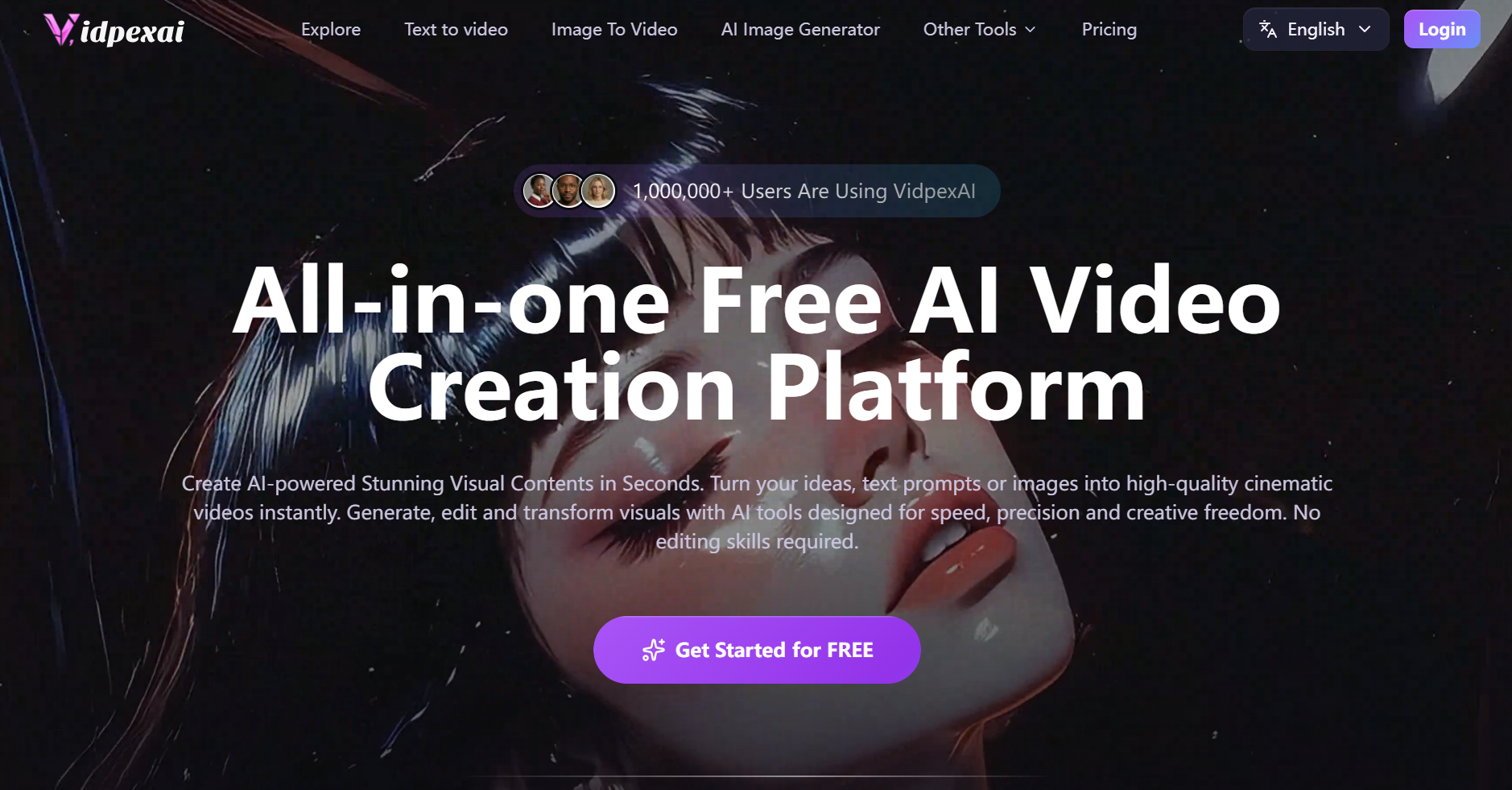
That’s the honest split: VidpexAI is closer to a creative AI hub than a stock assembler. For ai to make video from text when the text is ad copy tied to your visuals, prompt-native usually wins.
Where VidpexAI pulls ahead
- Custom product and portrait motion (not stock guesswork)
- Story-style photo to video ai (events, promos)
- Multi-model stylized tests for performance creative
- Credit packs on top of entry plans—buy capacity for a launch week without renegotiating subs
Where VidpexAI still breaks
- Not a full NLE — precise frame trims and broadcast packaging still leave the browser
- Template sameness until you customize Story scenes
- Credits scale with iteration — top models + many seeds still hurt
- Long-form — neither tool is a reliable free ai long video generator from text for 10+ minute coherence
- Explainers that need stock b-roll of “generic office” — Invideo is often faster
VidpexAI | /10 |
Prompt-native / stylized output | 8.5 |
Image + video + avatar stack | 8.8 |
Ad first-pass usability | 8.2 |
Timeline depth | 7.0 |
Stock-style explainers | 7.5 |
Overall | 8.2 |
Can One Tool Replace the Other? (No—Split the Job)
- Invideo.io = script + stock + timeline finishing for structured content.
- VidpexAI = custom visuals, ads, still animation, avatars, variant testing.
Growth teams often keep Invideo for weekly explainers and VidpexAI for paid social. Forcing one tool to do both usually wastes either creative time or stock-search time.
30 Scripts, Two Workflows: What We Logged
30 prompts (15 per tool), May 2026: ad hooks, 30s explainers, product demos, UGC-style spokesperson lines. Target 30–45s exports where supported; short 9:16 cuts for social batches.
Sample prompts (verbatim snippets)
Ad hook: “Stop scrolling—this serum absorbs in 10 seconds” + product on marble, label readable, 9:16
Ex plainer: “3 reasons your checkout fails” + clean corporate motion graphics feel
UGC: Friendly founder talking to camera, soft light, subtle head movement, 9:16
Metric | Invideo.io | VidpexAI |
First-pass “postable without stock swap” | 76% | 82% |
Manual clip replacement / regen needed | 41% of runs | 28% |
Avg. minutes to publishable short | 21 min | 18 min |
Stock mismatch incidents (explainer set) | Higher | N/A (prompt-native) |
Unique visual feel (blind panel, 1–5) | 3.1 avg | 3.8 avg |
Balanced read: Invideo won time-to-first structured draft on pure explainer scripts. VidpexAI won custom product/UGC sets where stock couldn’t match the brief.
Same Brief, Two Outputs (What Changed Our Mind)
Product ad (specific bottle still)
- Invideo: Generic skincare stock; timeline fix possible, not automatic.
- VidpexAI: Animated your label; readable on first seed more often.
Listicle explainer (“5 tax mistakes”)
- Invideo: Chaptered stock + titles fast; editor-friendly.
- VidpexAI: Workable, but you’re fighting for “template business video” less efficiently.
Stylized hook test (neon / high contrast)
- Invideo: Stock rarely matches; manual hunt.
- VidpexAI: Stronger stylized generations; more rerolls on extreme motion.

Credits, “Unlimited,” and Watermarks
Unlimited text to video is mostly marketing. Real math = cost per minute you’d publish.
- Invideo: Subscription + usage tiers; free text to video ai free paths usually watermark. text to video ai free without watermark typically means paid.
- VidpexAI: Entry plan + direct credit purchases; still not infinite free ai video generator from text at production quality.
Compare paid export rights before client delivery—not landing-page promises.
Pick by Role
Role | Start here | Why |
YouTube explainer / course creator | Invideo | Stock + chapters + timeline |
Performance marketer / DTC | VidpexAI | Product stills, variants, hooks |
Agency editor (timeline-first) | Invideo | Familiar finishing |
Creative strategist (many angles) | VidpexAI | Model + template experiments |
Solo beginner, script only | Invideo | Lowest friction stock path |
Needs image to video from catalog photos | VidpexAI | Still → motion in one stack |
FAQ: Invideo.io vs VidpexAI (8 Questions People Actually Search)
Q1: I already use Invideo for YouTube explainers—do I need VidpexAI at all? A: Keep Invideo if your videos are stock + voiceover + chapters. Add VidpexAI when you need your product, your founder, or stylized ads that stock can’t match—especially image to video from real photos.
Q2: Which is better as an ai text to video generator for TikTok/Reels ads? A: VidpexAI for custom product/UGC loops and multiple hooks. Invideo when the ad is mostly captions-over-stock and you’ll fix clips on the timeline.
Q3: Invideo.io vs VidpexAI credits—which gets expensive faster? A: Invideo costs rise with long timelines, premium stock, and export tiers. VidpexAI costs rise with model tier and regeneration count—but buying credit packs can cover a launch without upgrading everything. Track *cost per published ad*, not subscription name.
Q4: Can I get text to video ai free without watermark for client work? A: Assume no on free tiers for both. Watermark-free usually means paid. Run one client still through each paid trial export policy before you promise delivery dates.

Q5: I hate timeline editing— which tool annoys me less? A: VidpexAI if you want prompt/template → short clip. Invideo if you’re okay with light timeline fixes but want stock matched automatically first—editing is still part of the job.
Q6: Which handles “paste my blog post, make a video” better? A: Invideo—that’s core stock workflow. VidpexAI can repurpose text, but shine is custom visuals, not chaptered stock assembly.
Q7: text to video ai no sign up — is that realistic for business? A: Rare at quality tiers in 2026 (abuse + compute). Use free accounts for benchmarking; production needs login, asset history, and clear commercial rights.
Q8: We need 20 variant hooks from two scripts—who wins? A: VidpexAI for prompt-native variant generation. Invideo if variants are mostly voiceover swaps on the same stock spine with timeline control.
Final Verdict
In summary: Invideo.io leads script-to-stock speed, timeline editing, and structured explainers. VidpexAI leads prompt-native ads, image to video ai, avatars, and visual novelty when stock libraries fail the brief.
The conclusion: For ai video generator from text work tied to custom products and performance creative, VidpexAI is the stronger long-term fit. Invideo.io remains an excellent primary tool for stock-based channels—not a downgrade, a different production line.
Final recommendations
- Choose Invideo.io for explainers, list videos, stock-heavy channels, timeline-first teams.
- Choose VidpexAI for DTC ads, product motion, UGC-style shorts, and multi-angle testing.
- Choose both if you publish explainers weekly and paid social daily.
Final scores (2026): VidpexAI 8.2/10 · Invideo.io 8.0/10 — narrow win on prompt-native commercial work, not a universal replacement.

Ethan Brooks
Ethan Brooks leads AI videos and AI avatar workflows. With 12+ years specializing in generative AI, Ethan has produced AI-driven campaigns for global brands and tested every major model. He writes about prompts and future of visual storytelling.